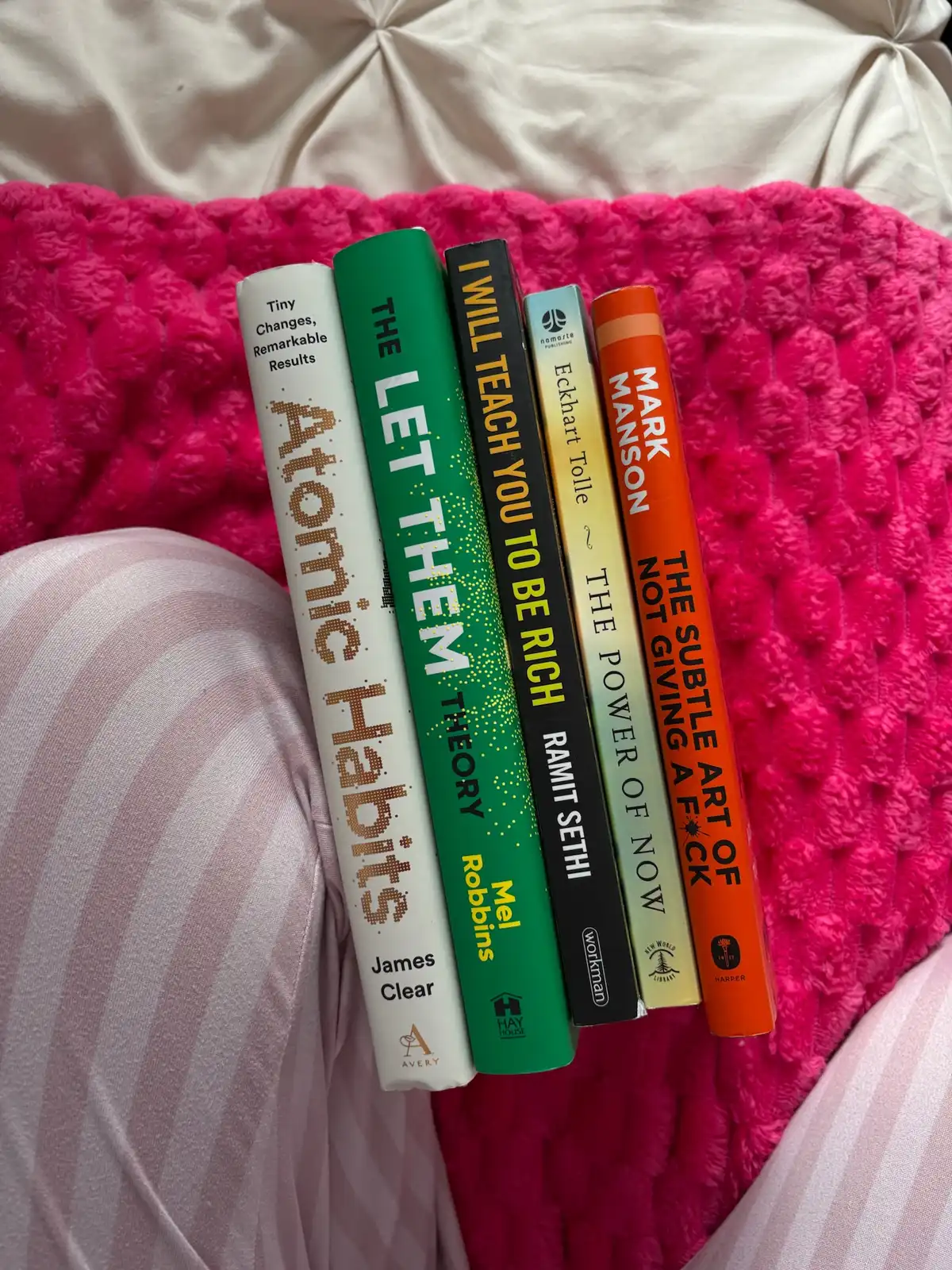
The Complete Guide to Creating Your Ideal Daily Routine
This daily routine guide helps you build a morning routine, workday flow, and evening routine that fit your real life instead of Pinterest fantasy. You will learn how to stack simple productive habits so your days feel calm, clear, and still very you. Bookmark this as your big sister playbook for days that feel less chaotic and more 'Lyss 5.0 is loading.'

TL;DR
This daily routine guide helps you build a morning routine, workday flow, and evening routine that fit your real life instead of Pinterest fantasy. You will learn how to stack simple productive habits so your days feel calm, clear, and still very you. Bookmark this as your big sister playbook for days that feel less chaotic and more 'Lyss 5.0 is loading.'
Hey girl!
Let's be honest for a second.
Have you ever opened your eyes, grabbed your phone, scrolled yourself into a black hole, then suddenly it is 11:32 a.m. and you have done nothing but overthink and watch people who already went to Pilates, made a green juice, and filed their taxes?
Meanwhile you are still in your bonnet wondering, "How is everyone else so put together and I am fighting for my life?"
'Cause same.
Your day is not ruined for that, by the way. You are not lazy or broken! You probably just do not have a routine that actually supports you yet. Not a strict robot routine. A soft, realistic one that makes sense for a 22-year-old human who likes naps, TikTok, and Dunkin Donuts coffee, and still wants her dream life.
This daily routine guide is here to help you design that. Think of it like a comfy girl talk while I walk you through how I plan my days, how I fix them when they flop, and how I keep moving toward my higher self without losing my silly side.
Bonnet on, notes app open. Let's go.
Why Your Daily Routine Matters More Than You Think
Your life is not one big montage. Your life is a bunch of regular days (and habits) stacked on top of each other.
If most of those days feel chaotic and unintentional, you will start to believe that is just "who you are." On the flip side, if your average Tuesday has even a little structure and care, you feel more grounded, more confident, and your self-talk gets gentler for free. As someone who's inconsistently bounced between both, trust me, the difference is real.
A routine is not punishment. A routine is you saying, "I care about how my day feels."
The Science of Habits and Routines
Let's nerd out for a second, then we will go back to the girl talk vibes.
Your brain loves shortcuts. Every time you repeat an action in the same context, your brain builds a tiny script:
- Alarm rings
- Brain: "Oh, this is the part where we grab the phone and scroll"
or
- Alarm rings
- Brain: "Oh, this is the part where we drink water, open the blinds, and stretch for 2 minutes"
Same brain. Different script!
Writers like James Clear talk about habits in steps: cue, craving, response, reward. You see or feel a cue, your body wants a certain feeling, you respond with an action, you get some kind of reward. That reward can be real rest or fake comfort.
Our job is not to become perfect habit robots. Our job is to make tiny upgrades so more of those automatic scripts actually help us.
How Routines Reduce Decision Fatigue
You only get so many decisions before your brain checks out and says, "We are done, please play TikTok sounds. Oh and bring snacks."
If you spend all day deciding everything on the fly, you will feel tired before you even get to the tasks that matter. That is why you feel fine in the morning then start dragging your feet by 3 p.m.
A routine removes some tiny choices so you have energy left for big ones.
Examples:
- You already know what time you wake up most days
- You already know the first three steps of your morning routine
- You already picked your top three tasks for the day last night
Suddenly you are not asking "What should I do next?" every five minutes. You just follow the little map you gave yourself.
Routines and Mental Health Connection
I will never tell you that a cute morning routine fixes mental health struggles. Life is not that simple.
What I will say is that a gentle structure can feel like a floatie when your brain feels heavy.
On low days, you do not have to figure out your entire life story. You just go, "Okay, my routine says: drink water, open blinds, stretch for 2 minutes, eat something." Small, doable, no perfection.
People often notice:
- Less "I wasted the whole day" guilt
- More predictable sleep
- A stronger sense of "I can trust myself"
If you want the deeper mindset side, go read my Complete Guide to Self-Love next. That one talks about how you speak to yourself, and that voice is the foundation for any routine you build.
Designing Your Perfect Morning Routine
Morning routine content can make you feel like you either wake up at 4:30 a.m. or you are failing at life. That is not real, but I get it, it can definitely feel like it!
Your morning routine is allowed to be soft, short, messy, and still powerful.
The goal is simple: give your body and mind a gentle on-ramp into the day instead of throwing them straight into chaos.
What Time Should You Wake Up?
Everyone always wants a specific time, like there is a magic number. There is not.
Ask yourself:
- What time do I realistically need to leave or log in?
- How long do I need to get ready without rushing?
- How much sleep does my body need to function like a nice person?
Work backwards from there.
If you need to be out the door at 8 a.m., you take about 45 minutes to get ready, and you want 30 minutes for a calm morning routine, you might aim for 6:30 or 7:00. Then you count back 7 to 9 hours for a target bedtime.
You do not have to nail this every day. Just pick a general wake time range and treat it like a guideline. Your nervous system loves predictability!
The Ideal Morning Routine Length
Some mornings you have time for an hour long self care ritual. Other mornings you are happy to brush your teeth and not forget deodorant. Both count.
Think in tiers:
- Tier 1: Survival - Bathroom, skincare, clothes, quick breakfast or snack
- Tier 2: Support - Five to ten minutes of mindset, journal, or quiet time. A little stretch or walk.
- Tier 3: Lux - Longer workout. Hair and makeup exactly how you like. Reading, prayer, or extra creative time.
On busy days, you hit tier 1 and try to sprinkle in tiny bits of tier 2. On slower days, you enjoy all three. No more "all or nothing."
Morning Routine Elements That Work
Here are ingredients. You pick the recipe.
-
Gentle wake up - Open blinds. Make your bed, even if it is just flattening blankets. Step outside for a second if you can, just to see real daylight.
-
Hydration before phone - Notice I did not say coffee. I said phone on purpose. If you tend to scroll your soul away in the morning, try this little order: Drink water, go to the bathroom, skincare, then phone. You will even feel the difference in your mood.
-
Mindset moments - This is where your inner voice gets a microphone. Short ideas: Write three things you are grateful for. Speak affirmations out loud in the mirror. Read one page of a book that feeds your mind. Script for two minutes as your future self talking about her day. For more on scripting, affirmations, and visualization, see my Complete Guide to Manifestation.
If you want a full menu of self-care practices to weave into your routine, check out my 10 Self-Care Rituals That Actually Work.
-
Movement - Not punishment. Not "I have to earn food." Just "I love my body enough to keep it from stiffening like a statue." Ideas: Ten minute stretch, short walk, quick gym session, light yoga in your room.
-
Nourishing breakfast - Nothing fancy needed. Just something that gives your body actual fuel. Eggs and toast, yogurt and fruit, oatmeal, smoothie. If I start my day with only sugar, I crash by lunch. When I give myself real food, I feel like a functioning adult, which is nice.
-
Intention and vibe setting - Ask yourself two questions: "What are my top three tasks today?" and "How do I want to feel at the end of the day?" Speak that out loud or write it in your notes.
Sample Morning Routines for Different Lifestyles
Take these and remix them. They are examples, not rules.
Student, early classes: 6:30 Wake up, phone on nightstand, not in hand. Open blinds, make bed. Bathroom and quick skincare. Two minute stretch, two affirmations. Simple breakfast or snack. Glance at planner or app for classes and assignments.
Work from home girlie: 7:30 Wake up, no notifications for the first 15 minutes. Drink water, light a candle. Skincare and comfy outfit. Ten minutes of journaling or reading. Short walk or home workout. Breakfast and quick plan for content and/or priorities.
Nine-to-five with commute: 6:00 Wake up. Make bed and open blinds. Shower or quick rinse, skincare, outfit. Five to ten minutes of quiet time, prayer, or affirmations. Breakfast, pack lunch if needed. Commute with a podcast that feeds your mind instead of frying it with Sexy Redd songs at 8 in the morning (no shade, I love me some Sexy Redd from time to time).
Creating an Effective Workday Routine
Mornings feel cute. The middle of the day is where routines go to die.
This is where your focus, energy, and discipline get tested. You might sit down ready to work, and suddenly your brain goes, "What if we deep clean the kitchen, check every app, and then feel guilty?"
Let's give your brain a little structure.
Time Blocking for Productivity
Time blocking sounds serious, but it can be simple. You are just giving each chunk of your day a job.
Example for a weekday: 9:00-11:00 main focus block (study, project, content, deep work). 11:00-12:00 admin (emails, messages, simple tasks). 1:00-3:00 meetings, classes, calls. 3:00-4:00 lighter tasks, review, organizing.
Write a loose version of this in your planner or notes each day. When you feel the urge to drift, glance at your block and ask, "What did I say this time was for?"
We are not chasing perfection. We just want to spend more time inside the plan than outside it.
The Pomodoro Technique
If your attention span feels like a golden retriever on espresso, short sprints help.
Basic Pomodoro style flow: Pick one task. Work for 25 minutes. Rest for 5 minutes. After four rounds, take a longer break.
You can tweak the numbers. Maybe you like 40 and 10. The main thing is you give your brain a clear "work" window and a clear "chill for a second" window, instead of half-working, half-scrolling all day.
During breaks, try to avoid going straight into high-drama content. Stand up, stretch, drink water, stare out the window like a mysterious main character. Give your mind a real reset.
Managing Energy, Not Just Time
Some people are morning engines, others come alive at night. You know your body better than any planner app.
Ask yourself: When do I usually feel most awake? When do I hit a wall? Which tasks drain me, and which feel fun?
Place your heavy tasks in your "I feel alive" window, and leave lighter tasks for low energy slots.
Avoiding the Afternoon Slump
The 3 p.m. crash is real. You are not weak for feeling it!
Things that help: Eat lunch that includes protein, not just fries. Drink water, not just soda. Step away from your screen for ten minutes. Move your body a little, even if that is walking around the building or house. Switch to a different type of task for a bit.
Try treating that slump time as a reset instead of a failure. A gentle reset keeps you going longer than shame ever will.
Evening Routines for Better Sleep
Nighttime routines do not get as much hype, but they control how tomorrow feels.
You can have the cutest morning routine written out, and then ruin it by scrolling until 2 a.m. while your alarm is set for 6:30. Your body is like, "Girl, pick a struggle..."
An evening routine is just you slowly telling your mind, "We are done for the day. It is safe to relax now."
The Wind-Down Ritual
Pick a rough time where your night mode starts. Maybe an hour before bed, maybe two. During that window, you start slowing things down.
Ideas: Dim the lights or switch to lamps. Put on cozy clothes. Ten minute tidy of your main space. Shower or bath, skincare, lotion, all the "everything shower" touches when you have time.
Think of it like you are getting a character ready for sleep in a video game. You are the character.
Digital Sunset: When to Unplug
Screens are fun, yet your brain does not love bright blue light and high drama right before sleep.
You can try: Setting a "no intense notifications" time. Putting your phone across the room while you read or stretch. Switching from fast, loud content to calmer options, like a podcast or a book.
You do not have to be perfect. Even shaving 20 to 30 minutes off your late night scroll can make your sleep feel different.
Sleep Hygiene Basics
Little sleep habits make a big difference. The Sleep Foundation has full guides, yet here are a few simple ones:
- Aim for a consistent sleep and wake time range
- Keep your room cooler rather than hot
- Try to keep your bed for sleep and rest, not hours of work or arguments
- Avoid very heavy meals right before lying down
Play with different tweaks and notice how you feel in the morning. Your body will tell you quickly which changes help.
Preparing for Tomorrow Tonight
Night-you has power. Night-you can either set morning-you up to win or hand her pure chaos.
Helpful prep: Pick your outfit and set it out. Pack your bag, laptop, or lunch. Write your top three tasks for tomorrow on paper or in your notes. Put your charger a little away from the bed so you get up to grab your phone.
These tiny moves can be the difference between "I overslept and cannot find anything" and "I woke up late, but my outfit and bag are ready so we are still good."
Weekend Routines and Reset Days
Weekends are not just free days where you black out and wake up on Monday like, "What happened?"
They are a chance to reset your space, your brain, and your schedule so the week feels lighter.
No need for a strict weekend plan. Just a few intentional moves.
The Sunday Reset Routine
Sunday resets have my heart. They feel like telling your future self, "I got you!"
You can include: Changing sheets. Laundry and actually putting clothes away, not on The Chair. Wiping counters and quick vacuum. Grocery run or delivery for basics. Glance at your calendar for the week. Rough meal ideas so you are not ordering food every night.
You do not have to do all of this every Sunday. Even two or three steps will make Monday feel less aggressive.
Balancing Rest and Productivity
Some people grind all weekend then wonder why they are exhausted. Others dissociate into a screen for two full days and then wonder why they feel behind.
Try this little formula for each weekend:
- One thing for your future self (reset, errands, planning)
- One thing for pure rest (nap, bath, reading, quiet time)
- One thing for joy (friend time, hobby, solo date, nature)
You are a whole person. You need all three.
Making Time for What Matters
If you do not plan the things that matter to you, other people's plans will swallow your time.
Ask: "What do I want more of in my life right now?" and "Where can I carve out even one hour for that this weekend?"
Maybe that is working on your goals, maybe that is a long walk with a podcast, maybe that is deep cleaning your room so your brain can breathe. Whatever it is, put it on your calendar like it has value, because it does!
How to Build Routines That Stick
You do not need a perfect routine for two days. You want a realistic routine that still works in three months. Let's talk about how to make that happen.
Start Small: The 2-Minute Rule
If a habit feels heavy, your brain will dodge it. Shrink it.
Examples: Instead of "stretch for 20 minutes every morning," start with 2 minutes. Instead of "journal three pages," start with one sentence. Instead of "read for an hour," start with one page.
The 2-minute version is your "no excuses" version. You can always do more. You just do not let yourself do less than that tiny baseline.
James Clear shares this style of strategy in his work, and it matches how I create routines. Make it so small you feel almost silly saying no to it.
Habit Stacking Explained
Habit stacking is one of my favorite tricks. You take something you already do and attach a tiny new action to it.
Formula: "After I [current habit], I will [new habit]."
Examples: After I brush my teeth, I will say one kind thing to myself in the mirror. After I start my coffee or tea, I will drink a glass of water. After I sit at my desk, I will write my top three tasks for the day.
This way you are not starting from zero. You are just adding small upgrades onto routines your brain already recognizes.
Tracking Your Progress
You do not need an aesthetic bullet journal with 47 highlighters. A simple system is enough.
Ideas: Habit tracker app. Calendar where you put a dot on days you followed your routine. Notes app list where you record streaks.
Focus on patterns, not perfection. "I did my routine 4 days out of 7 this week" is a win. We are going for progress, not a prison.
What to Do When You Fall Off Track
You will fall off. I do. Everyone does.
The part that matters is what you make it mean.
Try this approach: 1. Notice the dramatic story starting in your head. 2. Pause, breathe, talk to yourself like you would talk to me if I messed up. 3. Ask, "What is the smallest piece of my routine I can do today?" 4. Do that tiny piece. 5. Move forward.
No 3-day mental trial. No dragging yourself on TikTok and calling it "humor." Just a gentle reset.
If you struggle with not spiraling when you miss a habit, revisit the self-respect and self-talk work in my Complete Guide to Self-Love. Routines are way easier when your inner voice is on your team.
Routines for Different Life Stages
Your routine should match your life. Not the life you think you "should" have, the life you actually have. Here are some examples to spark ideas.
Routines for Students
You might be juggling school, a job, extracurriculars, and a social life that lives on FaceTime. You need structure and flexibility at the same time.
Morning: Wake at a consistent time on school days. Quick tidy so your room does not stress you out. Skincare, outfit, simple breakfast. Check class schedule and assignments.
Day: Use time between classes for quick review or light work. Break big assignments into small pieces across the week. Keep snacks and water in your bag so you do not crash.
Evening: Short study block, then shut it down. Pack bag for tomorrow. Wind-down routine to help your brain switch off.
Routines for Working Professionals
If you are in a nine-to-five style job, your routine has to protect your energy around those hours.
Morning: Wake early enough for 20 to 40 minutes of "you time." Movement, mindset, or quiet time. Breakfast. Look at your top three work priorities.
Workday: Time block deep work versus meetings. Real lunch break away from your desk. Boundaries around when you stop checking work messages.
Evening: Commute decompression, not just more emails. Dinner. Short reset of your space. Wind-down routine and bedtime prep.
Routines for Work-From-Home Life
Working from home can blur every line. You might feel like you are never off.
Tips: Start-of-work ritual: open laptop, open planner, write your priorities. Clear "off" time where you shut your laptop and move away from your workspace. Use a separate corner, table, or even just a specific chair for work mode. Lunch that happens at roughly the same time each day.
Treat your workday like a container, not an endless cloud.
Routines for Busy Parents
If you are parenting, your routine has extra humans in it. There is no perfect day. Tiny routines can still keep you afloat.
Ideas: Wake a little before your kids for coffee and two breaths. Morning checklist with them: teeth, clothes, breakfast, bags. Use nap times or school time for your priority tasks, not just random chores. Night reset: lay out clothes, prep bags, quick tidy.
Give yourself massive grace. This season is intense. Your "ideal routine" will look different and that is okay!
If you remember nothing else from this daily routine guide, remember this: you do not have to become a different person to have a peaceful, productive day. You just need a few tiny habits that respect your time, your energy, and your future self.
Start with one shift from this page. Try it for a week. Add another. Before you know it, your days feel less "chaos mode" and more "soft life, but still getting things done."
Lyss 5.0 is not a stranger. She lives inside the small choices I make every morning and every night. The best version of yourself is not stranger to you either. They, too, live inside those small choices. You've got this!
Key Statistics
Decision fatigue depletes willpower throughout the day
Managing energy, not just time, improves productivity
Adults need 7-9 hours of sleep per night for optimal health
Consistent sleep and wake times support better rest
Habit formation takes an average of 66 days, not 21
New habits need consistent practice over months, not weeks
Frequently Asked Questions
Related Posts

Growth Mindset vs Fixed Mindset: Which Do You Have?
This post breaks down what a growth mindset is, how it compares to a fixed mindset, and how to shift your thinking so you stop giving up on yourself. You will learn clear examples, real-life signs, and simple mindset habits you can use every day. If you stay to the end, you will walk away knowing exactly where you stand right now and how to move toward a growth mindset.

Inner Beauty: Why It Matters More Than You Think
Inner beauty is the mix of your kindness, character, emotional maturity, and authenticity that people feel when they are around you. Outer looks get the first glance, inner beauty decides who stays and how you feel about yourself long term. This post breaks down what inner beauty is, why it gets ignored, and how to grow it in daily life.

Building Self-Esteem: A Complete Step-by-Step Guide
This guide walks you through building self-esteem in a clear, step-by-step way so you can feel solid in who you are, not just confident on 'good hair' days. You will learn what self-esteem means, signs that yours needs support, and daily steps that help you like yourself for real. Come back to this page any time you feel wobbly and need a big sister reset.