
How to Practice Self-Compassion (When You're Your Own Worst Critic)
Self-compassion is how you speak to and treat yourself when you mess up, struggle, or feel behind. Instead of dragging yourself, you learn to give the same kindness you give everyone else, without turning your life into excuse-city. In this post we will walk through what self-compassion is, why it feels so hard, and simple ways to practice it daily so your inner critic stops running the show.

TL;DR
Self-compassion is how you speak to and treat yourself when you mess up, struggle, or feel behind. Instead of dragging yourself, you learn to give the same kindness you give everyone else, without turning your life into excuse-city. In this post we will walk through what self-compassion is, why it feels so hard, and simple ways to practice it daily so your inner critic stops running the show.
Hey girl hey!
If you are reading about self-compassion, I already know you are probably way nicer to other people than you are to yourself.
A friend can call you crying and say, "I messed up so bad," and your big sister energy jumps out. You remind her she is human, you hype her up, you help her think clearly.
Then you make one mistake and your own inner voice turns into a mean comment section on the internet.
I used to think I needed that harsh voice. Like, "If I go soft on myself I will stop grinding, stop growing, and just lay in bed with Doritos all day." That is the fear a lot of us have around self-compassion. We think kindness means laziness.
Spoiler: it really does not.
Self-compassion is not "I let myself off the hook for everything." It is "I still hold myself accountable, I am just not cruel about it." If you want the bigger picture of this, my Complete Guide to Self-Love breaks down how self-love sits under everything, and self-compassion is one of the main pieces.
Let us talk through what this actually looks like in real life.
What Is Self-Compassion?
Self-compassion is how you gracefully respond to your own pain.
Not just physical pain, but emotional pain. Embarrassment, regret, disappointment, anxiety, grief. Every time your heart feels heavy, you have a choice. You can attack yourself, or you can support yourself.
Here is the simple definition I like:
Self-compassion is treating yourself like someone you care about, especially when you are struggling.
Notice what is not in there.
It does not say "only once you are perfect."
It does not say "only when you handled everything correctly."
It does not say "only once you have earned it."
You are a human living on earth, you are going to mess up, fall off routines, say things you regret, stay too long, leave too late, cry over people who did not deserve a single tear. Self-compassion is the way you meet yourself in those moments.
The 3 Components of Self-Compassion
A lot of researchers talk about self-compassion in three parts. I like their breakdown, so we will use that in 'just a girl' language.
-
Self-kindness
This is the opposite of that aggressive inner voice.
Self-kindness sounds like:
- "That was rough, but I am learning."
- "I did my best with what I knew at the time."
- "I feel embarrassed, and that is okay. I am still worthy."
It is not fake positivity. It is honest and gentle at the same time.
-
Common humanity
This is your reminder that you are not a glitch.
Your brain loves to say, "Only you would do something that dumb" or "Everyone else has it together, it is literally just you."
Common humanity answers with:
- "Every person on this planet makes mistakes."
- "Other people have been where I am."
- "Nothing about this makes me broken or alone."
-
Mindful awareness
This is the part where you notice what you feel, without getting swallowed by it.
Mindful awareness sounds like:
- "Right now I feel ashamed."
- "I feel anxious in my chest."
- "My thoughts are spiraling."
You see the feeling, you name it, you let it move. You are not pretending everything is fine, and you are not letting that feeling define your entire identity.
Self-compassion is all three together: kind voice, shared humanity, and honest awareness.
Self-Compassion vs. Self-Esteem
Self-esteem is mostly about how you rate yourself.
- "Am I good at this?"
- "Am I pretty enough?"
- "Do people like me?"
Self-compassion cares more about how you treat yourself than how highly you rate yourself.
You can have low self-esteem and high self-compassion. Example: you might not feel very confident about your public speaking yet, but when you stumble over your words, you still speak to yourself kindly and practice again.
You can have high self-esteem and low self-compassion. Example: you know you are smart and talented, but if you mess up once, you drag yourself for days.
We want both.
You deserve to like yourself and to be kind to yourself.
Why Self-Compassion Is Hard
If self-compassion was simple, everyone would already be doing it.
Most of us learned something very different growing up.
The Fear of Being "Soft" on Yourself
Let us be honest. A lot of us secretly believe:
"If I stop bullying myself, I will stop improving."
So you treat your inner critic like a personal trainer.
You think the shame will keep you moving:
- "If I feel bad enough about my body, I will go to the gym."
- "If I guilt myself for scrolling, I will finally be productive."
- "If I scream at myself in my head, I will never mess up again."
What actually happens:
You feel horrible, you shut down, and then you do the same thing again while feeling ten times worse.
The funny part is, when you talk kindly to a friend who is slipping, they do better. They feel safe enough to try again. Self-compassion works the same way!
You still hold yourself accountable. You still look at your patterns. You just stop acting like emotional abuse is motivation.
Childhood Messages About Mistakes
A lot of our self-compassion struggles come from early messages about messing up.
Think about your childhood for a second:
- Were mistakes met with calm correction or loud anger?
- Did adults say things like "What is wrong with you?" or "You should have known better"?
- Did you feel like love dropped the second you were imperfect?
Those experiences go straight into your inner voice.
So now grown you spills one drink and hears, "Of course you did, you are so clumsy," in your head. Grown you misses one deadline and hears, "You always do this."
You learned to panic at the idea of being wrong.
Self-compassion feels strange at first because it is new. You are teaching your nervous system that mistakes are allowed and repair is possible.
How to Cultivate Self-Compassion
Now let us get practical. Here are five ways you can build self-compassion, starting today.
1. Speak to Yourself Like a Friend
I know you have heard this before, yet we are going to actually use it now.
Next time your inner critic starts dragging you, pause and ask:
"If my best friend called me and told me this exact story, what would I say to her?"
Then say that to yourself.
Examples:
-
Inner critic: "You sounded so dumb in that conversation."
Friend voice: "You were nervous and that is human. The people who love you are not replaying that the way you are." -
Inner critic: "You went back to that person again. You are pathetic."
Friend voice: "You went back because you care and you were hoping for change. Now you have more information. You can choose differently."
If you notice that negative voice has a lot to say about everything, you might like my post Stop Negative Self-Talk where we give that voice a whole makeover.
2. Acknowledge Common Humanity
Your brain loves to shout "Only you."
Self-compassion gently reminds you, "No, actually, not only me."
When something painful happens, try adding one simple sentence:
- "Other people have gone through this too."
- "Someone else has felt this exact feeling."
- "No part of this makes me less human."
This does not erase your story. It just takes you out of that weird shame bubble that says you are the only one who has ever fumbled a bag, stayed too long in a toxic situation, or sobbed over someone you knew was not good for you...
3. Practice Mindful Awareness
Mindful awareness is just you noticing your thoughts and feelings in real time.
Instead of "I am a mess," you practice:
- "Right now I feel messy."
- "Right now my chest feels tight."
- "Right now my thoughts are really loud."
See how that tiny shift creates a little space between you and the feeling?
One exercise you can try:
- Put your phone down for a minute.
- Place one hand on your chest and one on your stomach.
- Take a slow breath in and out.
- Name what you feel, without judging it.
For example: "I feel anxious and sad. I feel it in my chest and my throat."
No fixing. No analyzing. Just noticing.
That alone is a self-compassion move!
4. Write a Self-Compassion Letter
This one sounds corny until you actually do it.
Think about a situation you still feel ashamed about. Maybe a breakup, a friendship ending, something you said, something you did not do.
Write a letter to yourself from the perspective of someone who loves you deeply. You can imagine it coming from future you, from a loving friend, or from the version of you who feels closer to God and sees the bigger picture.
In the letter, include three parts:
- Validation: "Of course you felt hurt, that situation was a lot."
- Understanding: "You made the choice you thought was right back then."
- Encouragement: "You are allowed to grow from this and move forward."
You do not have to read it to anyone. This is for you. You are giving your mind the words you needed.
5. Use the Self-Compassion Break
I love a good little routine you can use on repeat. A self-compassion break is a quick script you run when you catch yourself spiraling.
Here is one version you can try:
-
Name the moment:
"This is a moment of suffering." -
Remember you are not alone:
"Suffering is part of being human. Other people feel this too." -
Offer yourself kindness:
"May I be gentle with myself in this moment. May I give myself the support I need."
You can swap the words to match your style.
My version sometimes sounds like:
"Ok girl, this hurts. Other people have been through this too. I deserve kindness right now, not more stress."
If you like adding affirmations, you might want to read my Self-Love Affirmations and mix some of those lines into your self-compassion break.
Self-Compassion in Daily Life
Self-compassion is cute in theory. The real test shows up on regular random Tuesdays.
Let us walk through three everyday situations and how self-compassion can show up in each.
When You Make a Mistake
Example scenarios:
- You send a text to the wrong person.
- You miss a deadline.
- You say something awkward in a group and replay it 400 times later in the shower.
Old pattern:
- "I am so stupid."
- "I always ruin everything."
- "No one is ever going to take me seriously."
Self-compassion shift:
-
Pause the spiral.
Take one slow breath. Put a hand over your heart if that feels comforting. -
Name the situation clearly.
"I missed a deadline." or "I said something that felt awkward." -
Add common humanity.
"Every person on this planet has made a mistake like this at some point." -
Choose a kind and honest thought.
"I do not love how that went. I can learn from it and repair what I can." -
Take the next aligned action.
That might look like apologizing, asking for an extension, or just letting that moment go.
Notice we are not pretending the mistake did not happen. Self-compassion helps you handle it without ripping yourself apart.
When You Are Struggling
Sometimes you are not messing anything up, you are just not okay.
Maybe your mental health is heavy, your period is period-ing, or you are grieving.
Old pattern:
- Forcing yourself to keep the same productivity level.
- Calling yourself weak for feeling sad.
- Comparing your "low energy" day to someone else's highlight reel.
Self-compassion shift:
- Ask, "What do I realistically have capacity for today?"
- Shorten your to-do list to the non-negotiables.
- Add one small nurturing thing: a nap, a snack, some sun on your face, a shower.
You might say:
- "Today is hard. I am allowed to adjust my expectations."
- "My worth is not measured by how productive I am on a bad day."
A lot of us had childhoods where rest felt dangerous or lazy. You are allowed to rewrite that story! If you want more ideas for taking care of yourself on hard days, my Mental Health Self-Care Tips has practical strategies.
When You Compare Yourself to Others
You scroll once and suddenly you are convinced every other girl your age has the perfect body, the perfect relationship, the perfect career, flawless skin, 6 am gym discipline, and a cute dog.
Comparison eats self-compassion for breakfast if you let it.
Self-compassion shift:
- Catch the comparison thought: "She is ahead and I am behind."
- Remind yourself: "Online is not the full story."
- Turn your focus back to your own lane: "What is one thing I can do today that my future self will thank me for?"
Sometimes you even need a little boundary with your phone. Muting or unfollowing accounts that activate heavy comparison is very self-compassionate.
A gentle reminder: people have probably looked at your life and compared themselves too. You just cannot see their thoughts ;)
FAQ Section
Is self-compassion the same as making excuses?
No. Self-compassion does not mean you avoid responsibility. It means you talk to yourself with respect while you take responsibility. "I messed up, and I am still worthy" is different from "I did nothing wrong, so I do not have to change." True self-compassion actually makes it easier to improve, because you are not wasting energy on shame.
How do I show myself compassion after failure?
Start by naming what happened without adding insults. "I failed this test," not "I am a failure." Remind yourself that everyone fails at something. Then ask, "What can I learn from this?" and "What support do I need right now?" That support might be a tutor, a new plan, or simply rest before you try again. If you want help with the way you talk to yourself in those moments, my post Stop Negative Self-Talk will walk you through it.
Can self-compassion improve mental health?
Yes. Research points to self-compassion being linked with lower anxiety and depression, and more emotional resilience. From real life, I can say that once I stopped bullying myself, my mood and motivation both felt more stable. Self-compassion gives your nervous system a calmer base to work from, which helps every other tool you use for mental health land better.
What are daily self-compassion exercises I can try?
A few simple ones:
- Pause once a day to ask, "How am I really feeling?" and answer honestly.
- Replace one harsh thought with a kinder one every time you catch it.
- Put a sticky note on your mirror with a compassionate phrase for the week.
- Give yourself a three-breath self-compassion break when stress rises.
Small on purpose, so you can actually keep them going.
How is self-compassion different from self-pity?
Self-pity sounds like, "Why does this always happen to me, my life is the worst, nothing ever changes." It keeps you stuck and focuses only on how unfair everything feels. Self-compassion acknowledges pain, then adds kindness and responsibility. "This is really hard, and I deserve support, and I can take steps forward." One keeps you in a victim loop, the other helps you move through hard things without abandoning yourself.
Self-compassion is not about turning your life into a soft little marshmallow where nothing uncomfortable happens. Life will still life.
The difference is this: you stop leaving yourself alone in your hardest moments.
You start talking to yourself like the girl you are trying to become, not like a bully from middle school. You start making choices that respect your feelings and your future self at the same time.
You are allowed to grow, to hold yourself to a standard, and to be kind to your own heart along the way.
That mix changes everything!
Key Statistics
Self-compassion is linked with lower anxiety and depression
Research on self-compassion and mental health outcomes
Self-compassion supports greater emotional resilience
Studies by Dr. Kristin Neff on self-compassion benefits
Frequently Asked Questions
Related Posts

Growth Mindset vs Fixed Mindset: Which Do You Have?
This post breaks down what a growth mindset is, how it compares to a fixed mindset, and how to shift your thinking so you stop giving up on yourself. You will learn clear examples, real-life signs, and simple mindset habits you can use every day. If you stay to the end, you will walk away knowing exactly where you stand right now and how to move toward a growth mindset.

Inner Beauty: Why It Matters More Than You Think
Inner beauty is the mix of your kindness, character, emotional maturity, and authenticity that people feel when they are around you. Outer looks get the first glance, inner beauty decides who stays and how you feel about yourself long term. This post breaks down what inner beauty is, why it gets ignored, and how to grow it in daily life.
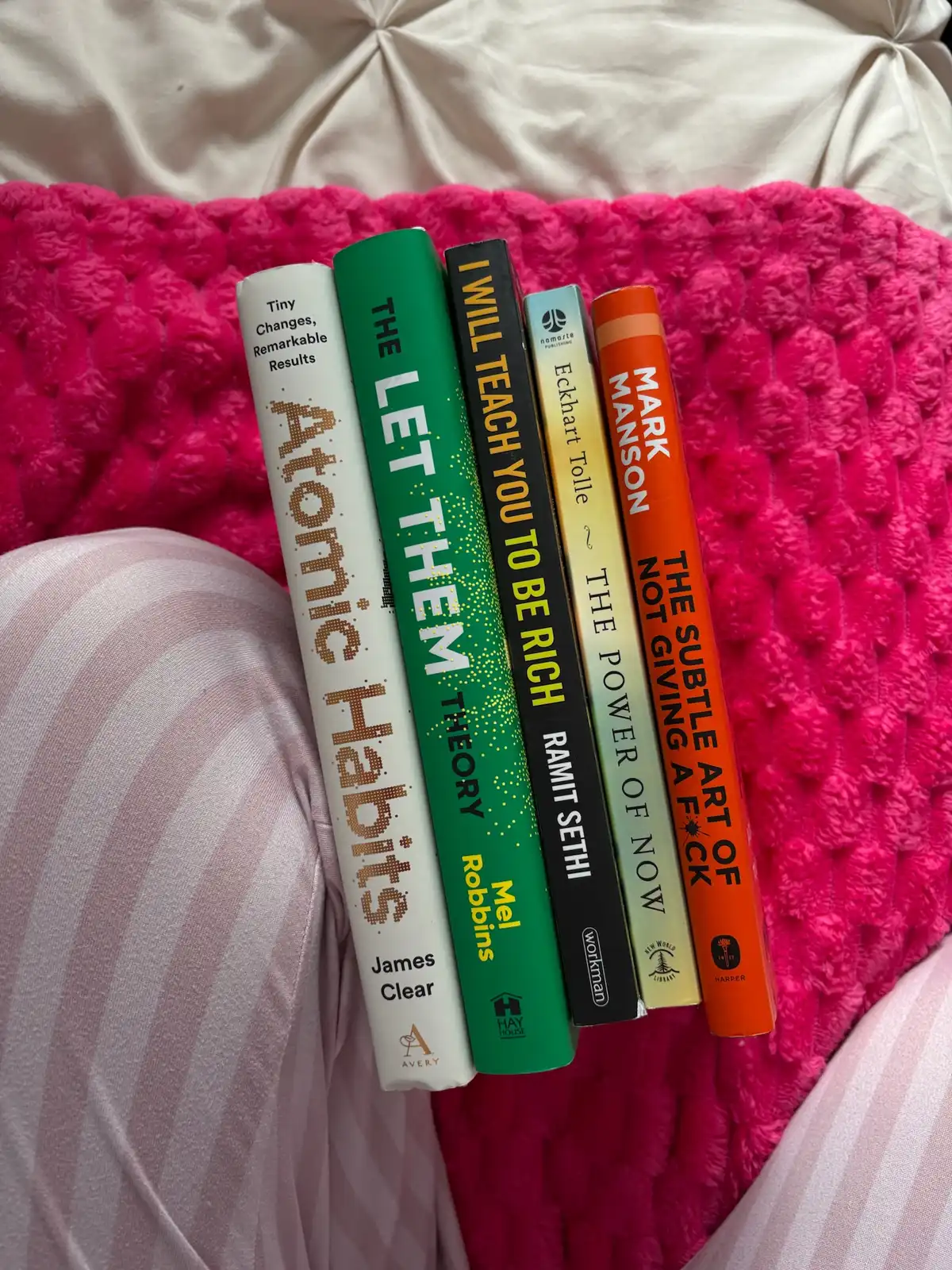
The Complete Guide to Creating Your Ideal Daily Routine
This daily routine guide helps you build a morning routine, workday flow, and evening routine that fit your real life instead of Pinterest fantasy. You will learn how to stack simple productive habits so your days feel calm, clear, and still very you. Bookmark this as your big sister playbook for days that feel less chaotic and more 'Lyss 5.0 is loading.'